Step 1
Exposure scan
Check whether repository visibility or configuration widens risk.
Detailed workflow
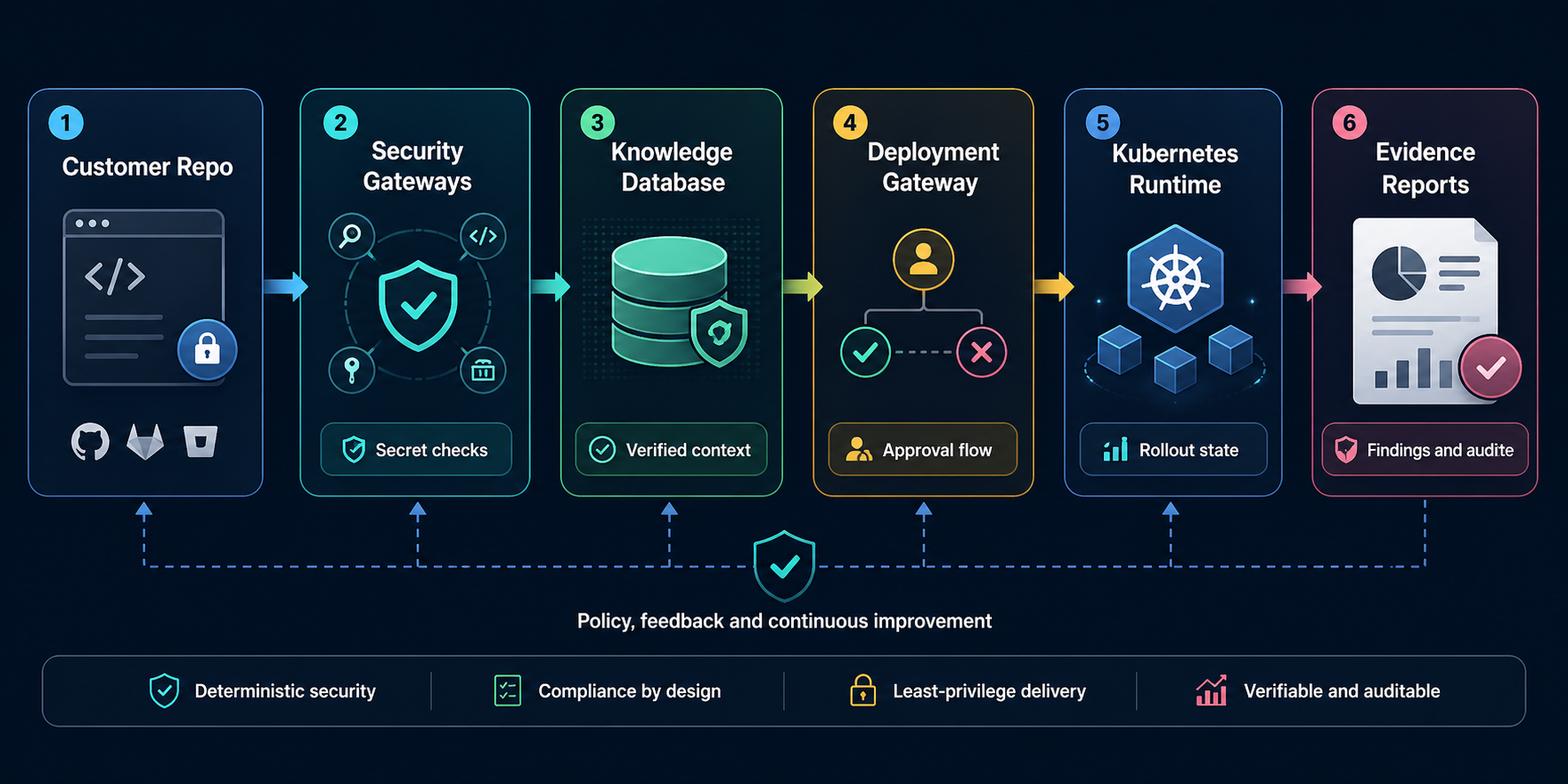
This page shows how deterministic security tools, AI-assisted analysis, deployment control, and evidence fit together.
Overview
Every stage adds system evidence before the next release decision.
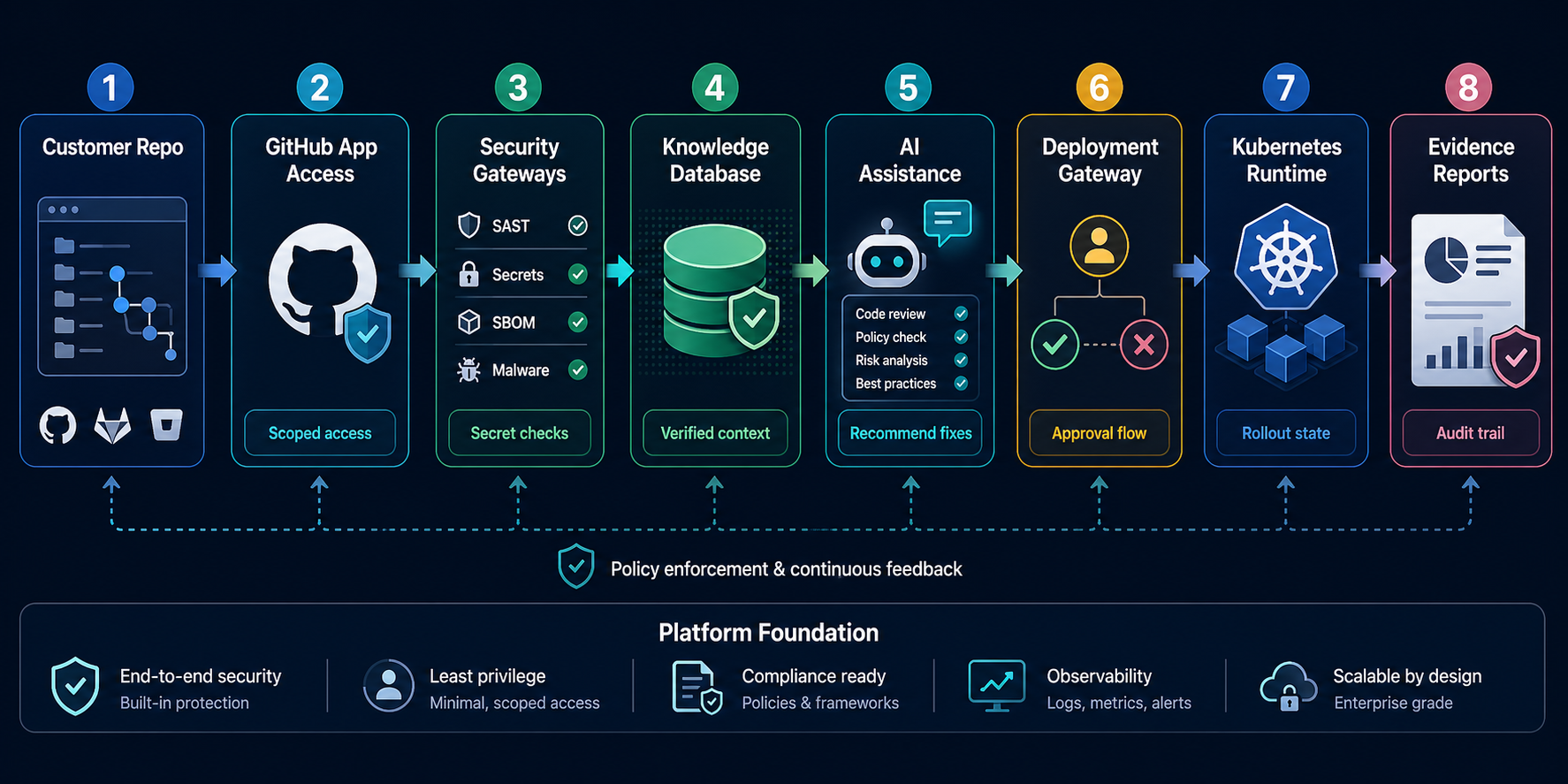
Repository onboarding
The customer installs the GitHub App, selects repository scope, and can revoke access by removing the installation.
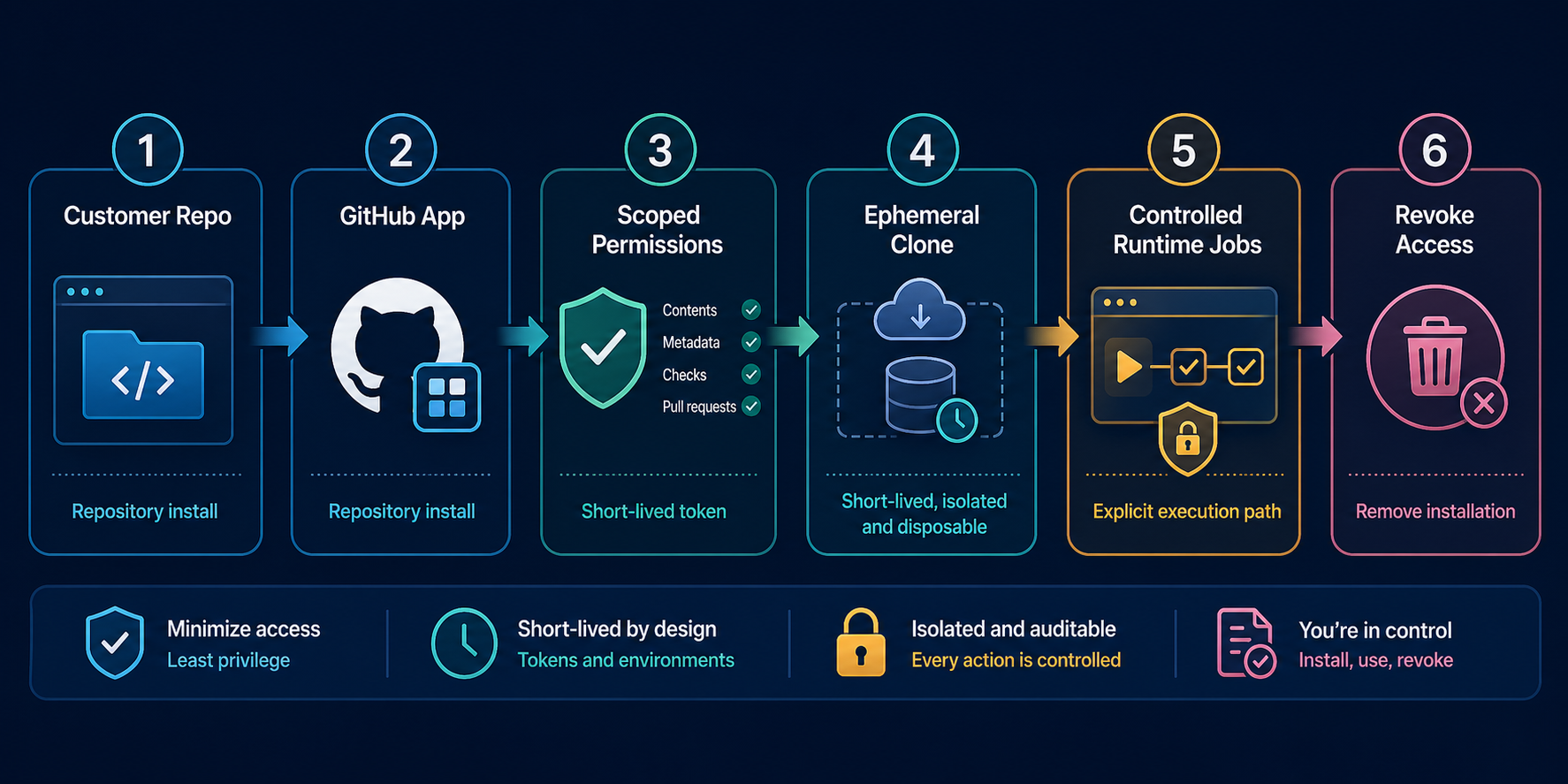
Security Gateway flow
Security Gateway turns scanner output into explicit findings that operators can triage.
Step 1
Check whether repository visibility or configuration widens risk.
Step 2
Surface risky files, tokens, or configuration patterns before rollout.
Step 3
Run deterministic repository checks instead of relying on vague AI confidence.
Step 4
Use AI to explain logs, findings, risk level, and follow-up decisions.
Knowledge Database flow
The knowledge layer turns repo materials, docs, and prior sessions into a traceable source base.
Input
Repository context, docs, and prior sessions become queryable inputs.
Retrieval
Operators retrieve evidence-backed project context instead of relying on memory.
Control
Verified sources reduce hallucinated assumptions in follow-up tasks.
Deployment Gateway flow
The platform treats deployment as a governed workflow, not an untracked shell side effect.
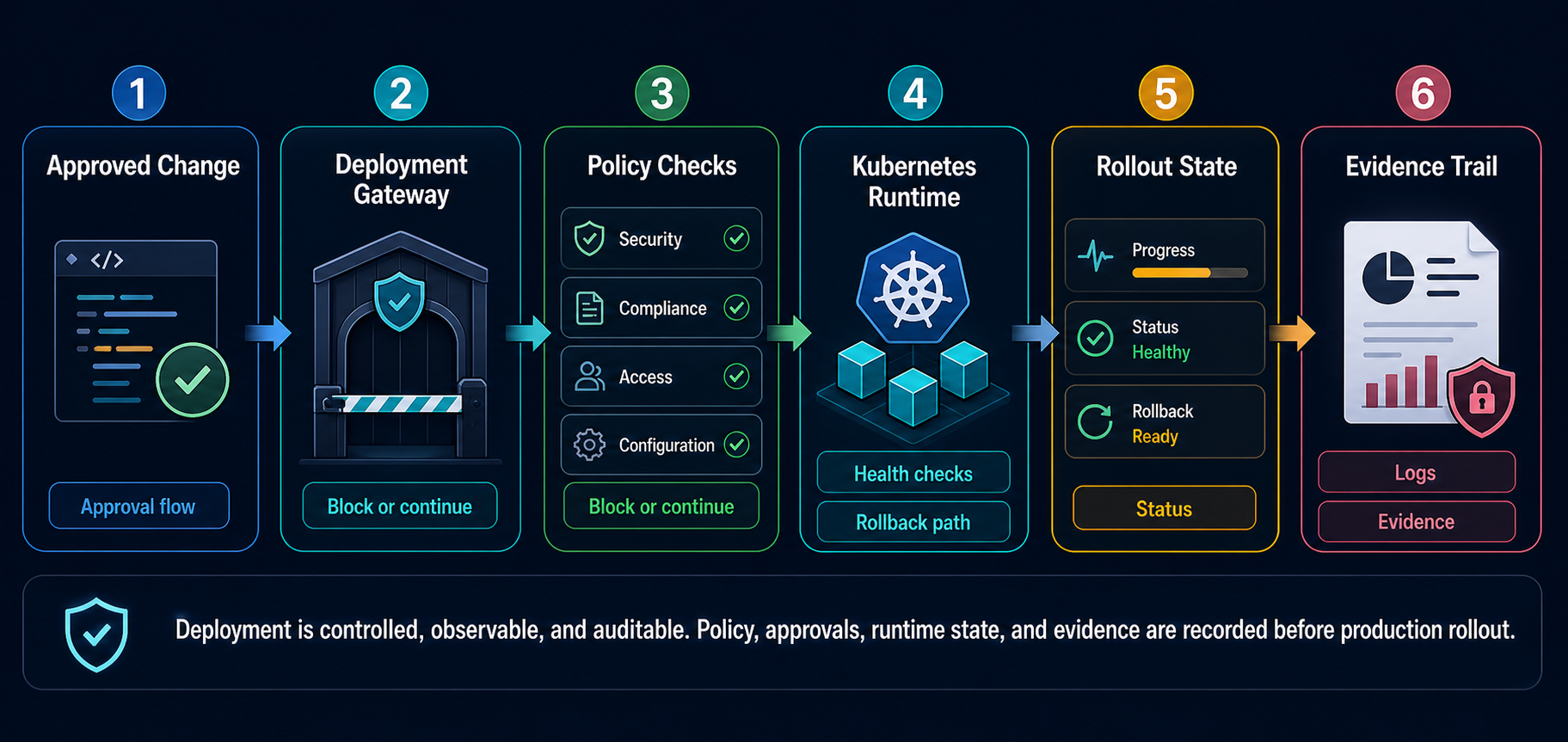
Start
Deployment begins through an explicit gateway path.
Policy
Required rules and operator approvals can block rollout.
Runtime
Health, state, and rollback signals stay visible during execution.
Evidence
Logs, findings, and deployment status remain attached to the same path.
Why this matters
Release control is only useful if runtime state stays visible after the trigger. securecod.eu keeps policy, rollout state, and evidence in one governed path.
AI Playground and operator control
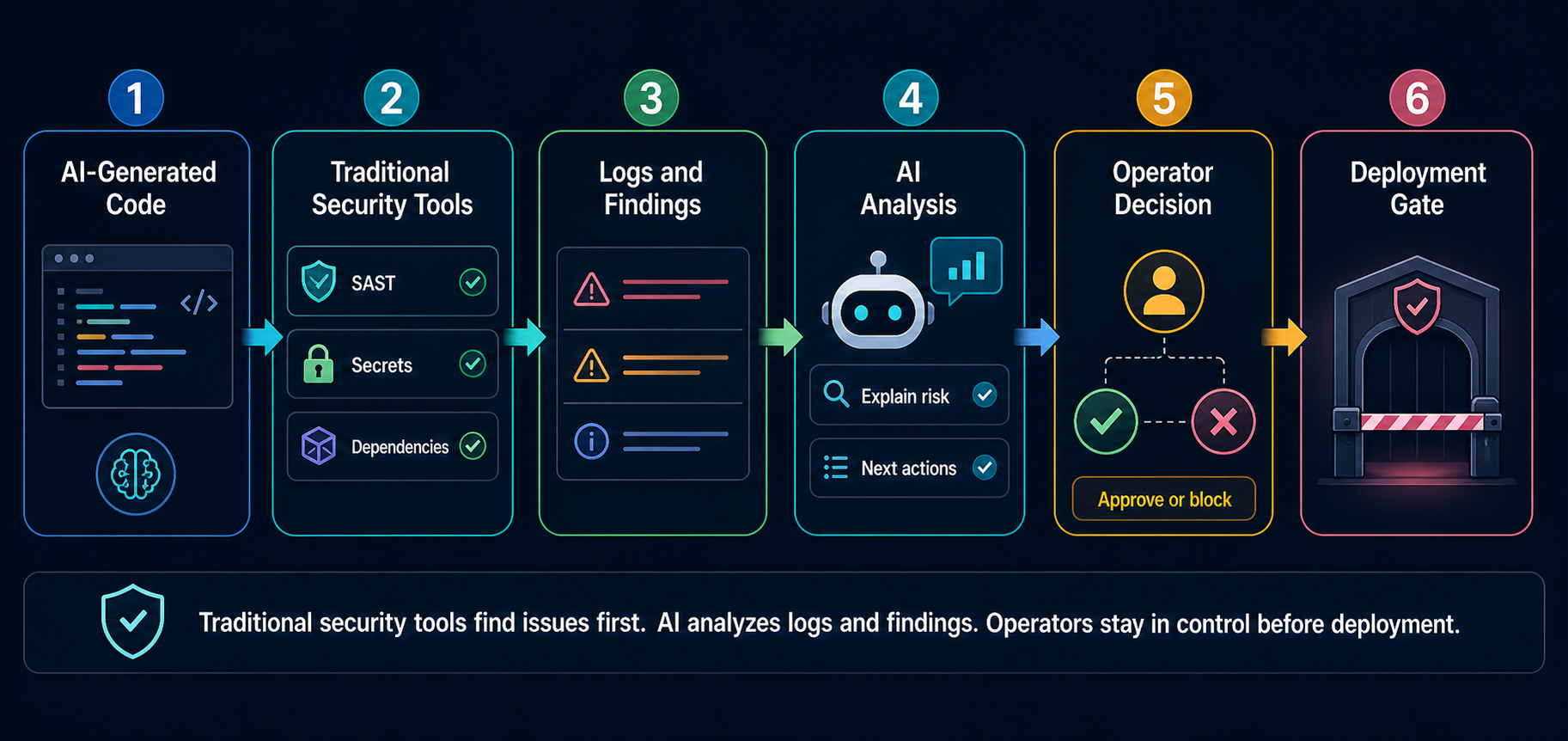
AI explains scanner logs, findings, and recommendations after deterministic evidence exists.
Human operators
Operators review findings, rollout state, and approvals before acting on the result.
AI assistance
AI helps interpret findings and next actions, but it does not replace security tools.
Artifacts and audit
The platform should expose not only whether something ran, but what findings, approvals, and deployment facts resulted from it.
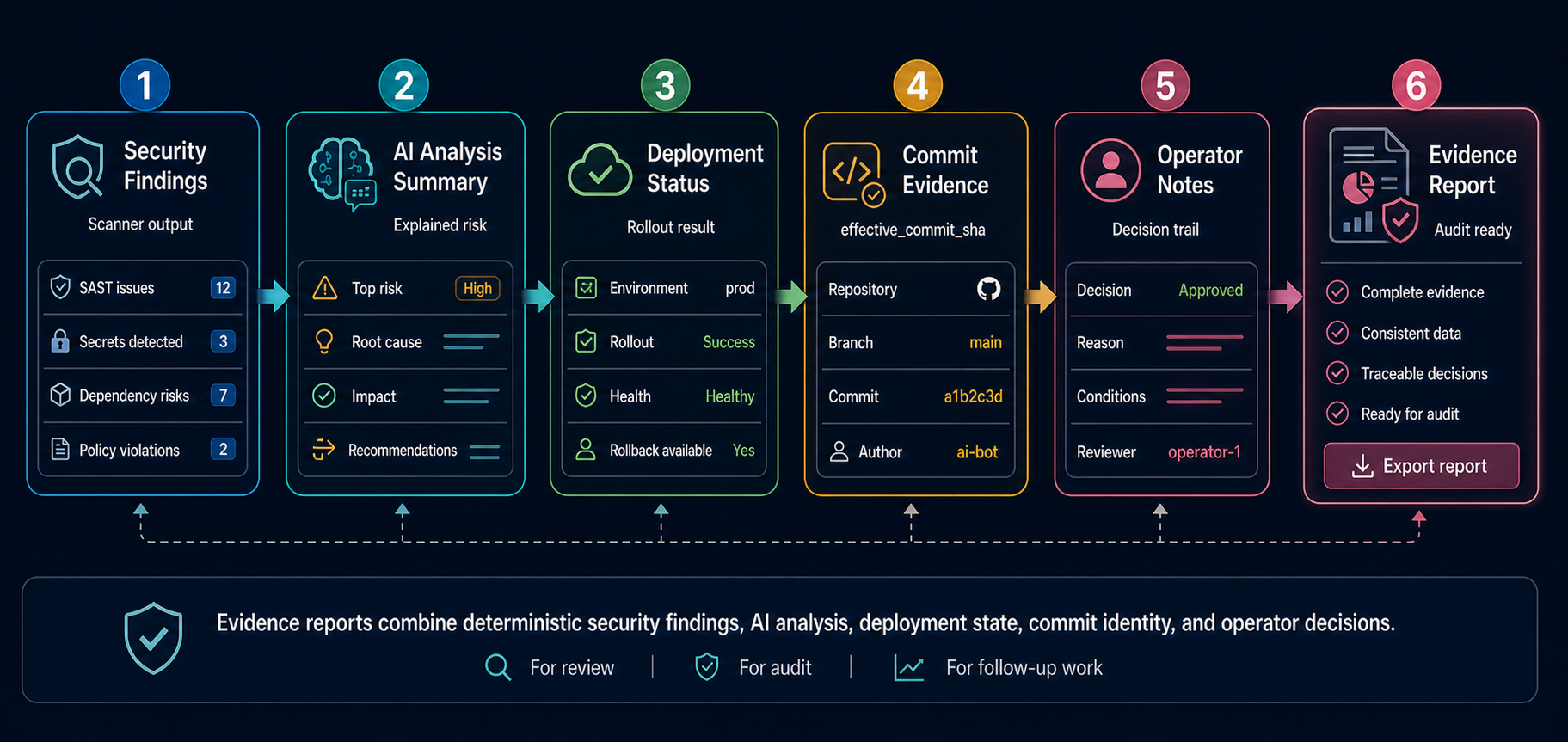
Security results and runtime output stay tied to the workflow path.
effective_commit_shaOperators can see what commit actually drove the result.
Decision points remain visible after the workflow ends.
Rollout outcome and follow-up remain reviewable.
Runtime model
Whether the runtime is a compact single-node footprint or a lightweight multi-node setup, the goal stays the same: deterministic rollout, health checks, and explicit rollback behavior.
Option
Useful for simpler, compact environments where operational surface must stay small.
Option
Useful when stronger runtime separation and more resilient rollout behavior are needed.